The global cable tray market is experiencing robust growth, driven by accelerating infrastructure investments, industrial automation, and the expansion of data centers and renewable energy projects worldwide. According to the latest market research, the global cable tray market is expected to exceed $5 billion in 2024, with projections indicating continued strong performance through the end of the decade.
The Asia-Pacific region currently holds the largest market share, accounting for approximately 38-42% of global demand. The region is also witnessing the fastest growth, with a compound annual growth rate (CAGR) of 6.8% – significantly above the global average.
By 2030, the global cable tray market is forecast to surpass $8 billion, representing steady expansion across all major geographic regions.
The Asia-Pacific region's dominance in the cable tray market is no coincidence. Several factors are driving demand across the region:
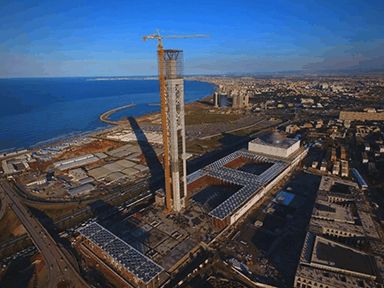
China remains the world's largest cable tray market by a wide margin. The country's ongoing investments in transportation infrastructure (high-speed rail, subways, highways), industrial parks, and data centers continue to generate substantial demand for cable management solutions. The "Belt and Road" initiative has also created demand for cable trays in partner countries.
India is emerging as the fastest-growing major market for cable trays. Government initiatives such as "Smart Cities Mission," "Digital India," and "Make in India" are driving infrastructure spending across urban development, power distribution, manufacturing, and telecommunications. The rapid expansion of data centers in Mumbai, Chennai, Hyderabad, and other tech hubs is also contributing to demand.
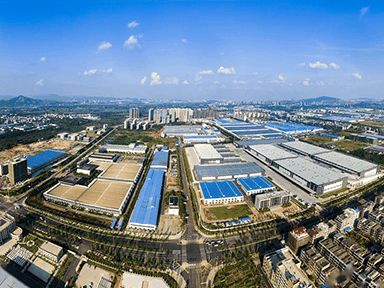
Countries including Vietnam, Thailand, Indonesia, and Malaysia are seeing continued growth in manufacturing and export-oriented industries. New industrial parks, factory expansions, and port infrastructure projects require extensive electrical cabling systems, driving cable tray adoption.
Several industry sectors are contributing to the global cable tray market's growth trajectory:
The proliferation of cloud computing, artificial intelligence, and digital services is driving unprecedented data center construction worldwide. Hyperscale data centers require massive cable management infrastructure, with perforated cable trays being the preferred solution for high-density server environments.
Solar farms and wind power projects require extensive cable routing systems to connect panels, inverters, and grid connections. Cable trays provide organized, maintainable, and weather-resistant solutions for these outdoor installations.
Automation and Industry 4.0 initiatives are increasing the density of power and data cabling within factories. Cable trays offer flexible, accessible cable management that supports ongoing production changes and equipment upgrades.
Airport expansions, railway electrification, subway systems, and port upgrades all rely on cable trays for organized electrical routing. These long-lifecycle projects value the durability and maintainability of quality cable tray systems.
Large-scale commercial buildings, hospitals, universities, and government facilities require sophisticated electrical distribution and low-voltage systems, creating steady demand for cable trays in non-industrial applications.
| Region | Key Drivers | Growth Outlook |
|---|---|---|
| Asia-Pacific | Infrastructure investment, manufacturing expansion, data center growth | Strongest growth (CAGR 6.8%) |
| North America | Data center construction, grid modernization, industrial reshoring | Moderate growth |
| Europe | Renewable energy projects, building retrofits, rail infrastructure | Steady growth |
| Middle East & Africa | Megaprojects (NEOM, etc.), port development, power distribution | Accelerating growth |
| Latin America | Industrial development, infrastructure catch-up | Modest but positive growth |
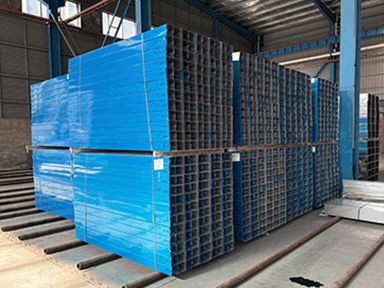
Data center growth is driving demand for perforated cable trays, which offer superior airflow for cable heat dissipation compared to solid-bottom alternatives.
Earthquake-prone regions (Japan, Indonesia, Philippines, parts of China and the Americas) are adopting stricter building codes requiring seismic bracing for electrical systems, boosting demand for seismic-ready cable tray supports.
Projects in coastal areas, chemical plants, and ports increasingly specify hot-dip galvanized or stainless steel cable trays for long-term durability.
Contractors are seeking pre-assembled or modular cable tray systems to reduce on-site labor costs and accelerate construction schedules.
Green building certifications (LEED, BREEAM) are driving demand for cable trays made from recycled materials or those with environmental product declarations.
The global cable tray market is on a clear growth trajectory, with the Asia-Pacific region leading both in current market share and future growth potential. Infrastructure investment, industrial automation, and digital transformation – particularly the expansion of data centers – will continue to drive demand through 2030.
For manufacturers and suppliers like Burkaf, this presents significant opportunities to serve growing markets with high-quality, application-engineered cable management solutions that meet local codes, climate conditions, and industry-specific requirements.
Source: Market research analysis, 2024-2025. Figures are estimates based on available industry data.
Burkaf – Cable Tray System Expert. Stay informed with the latest industry news and market insights.